




Tummy Tuck (Abdominoplasty)

Pregnancy, significant weight loss, and changes over time can leave the abdomen with loose or stretched skin, weakened abdominal support, or changes in contour that diet and exercise cannot always correct. A tummy tuck, or abdominoplasty, is a surgical procedure designed to remove excess abdominal skin and reshape the midsection. When appropriate, the procedure may also include repair of separated abdominal muscles and liposuction to further refine the surrounding contours.
Tummy Tuck in San Antonio – Personalized Abdominal Contouring
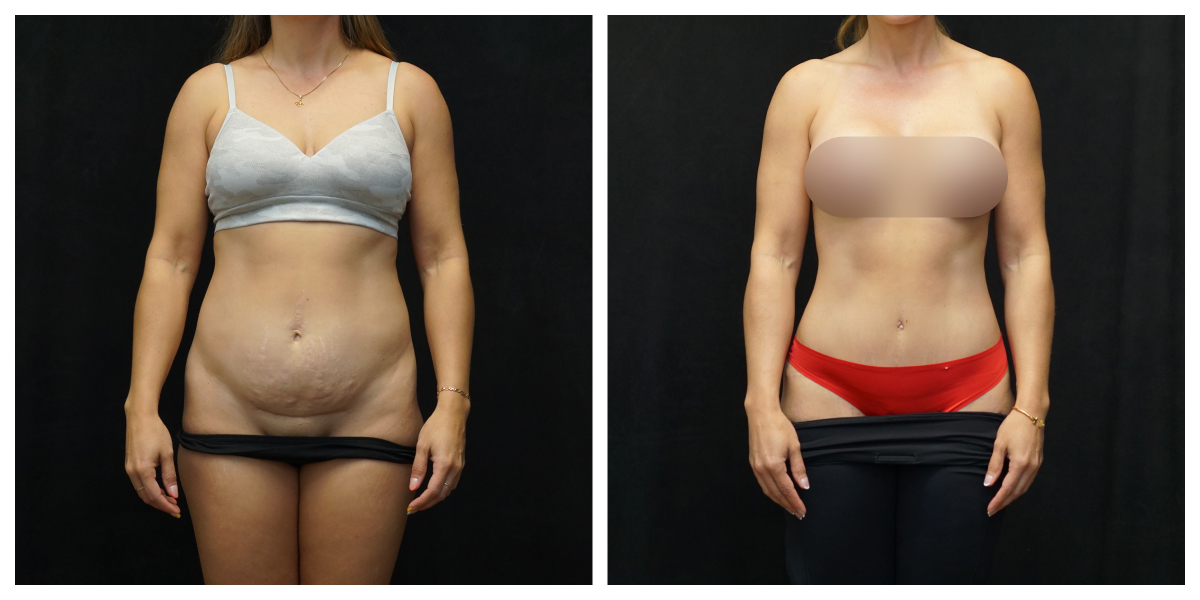

Patient Story:
This 38-year-old mother of three wanted to restore her abdominal contour after pregnancy. Despite maintaining an active lifestyle with weight lifting and cardio, she was bothered by loose abdominal skin and stretch marks that could not be addressed through exercise alone.
Dr. Albright performed a full abdominoplasty with muscle repair, along with liposuction of the abdomen and waist to improve the contour of her midsection. Her treatment was staged, with breast augmentation and lift performed separately as part of her overall body restoration plan.
The tummy tuck addressed the loose skin and abdominal changes that remained after having children, while liposuction helped refine the surrounding waistline for a smoother, more defined contour. Her abdominal results are shown at 16.5 months post-operatively.
- Treatment: Tummy tuck
- Additional Procedures: Muscle Repair, Liposuction
- Gender: Female
- Age: 38
- Height: 5' 1"
- Weight: 120 lbs
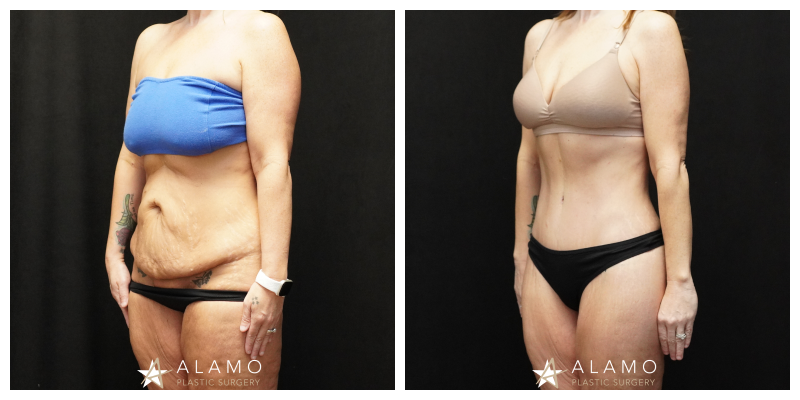
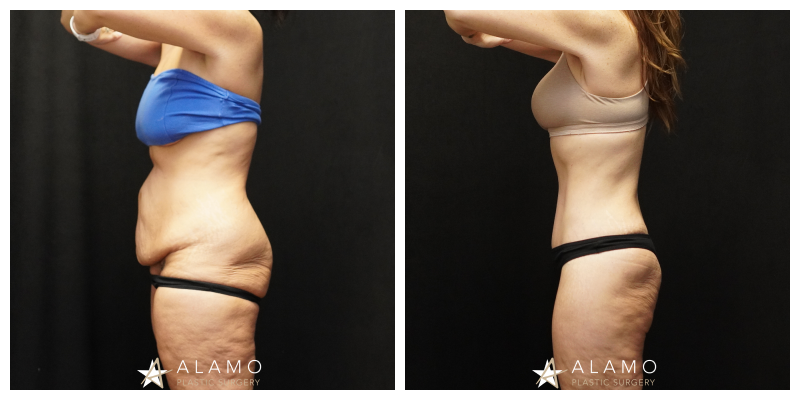
Patient Story:
This 42-year-old mother wanted to restore her abdominal contour after the changes associated with having children. Her goal was to improve the appearance of her midsection and achieve a firmer, more streamlined abdominal profile.
Dr. Albright performed a full abdominoplasty with muscle repair to restore the abdominal wall and address excess tissue. Liposuction was performed at the same time to further refine the surrounding contour.
Together, the tummy tuck, muscle repair, and liposuction created a smoother and more balanced abdominal shape. Her results are shown at 5 months post-operatively.
- Treatment: Tummy tuck
- Additional Procedures: Muscle Repair, Liposuction
- Gender: Female
- Age: 42
- Height:
- Weight:
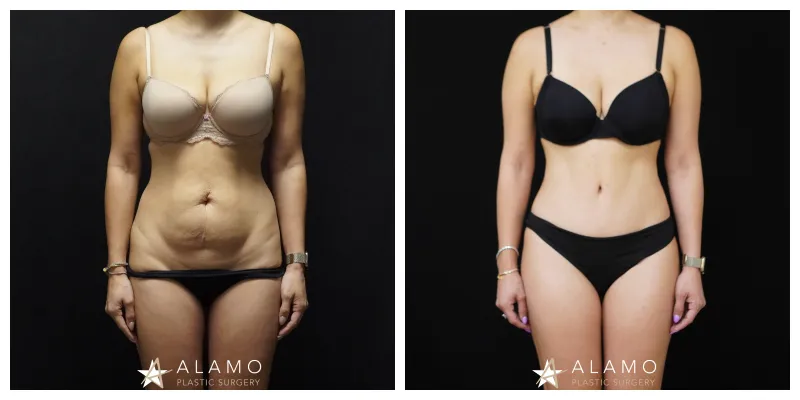
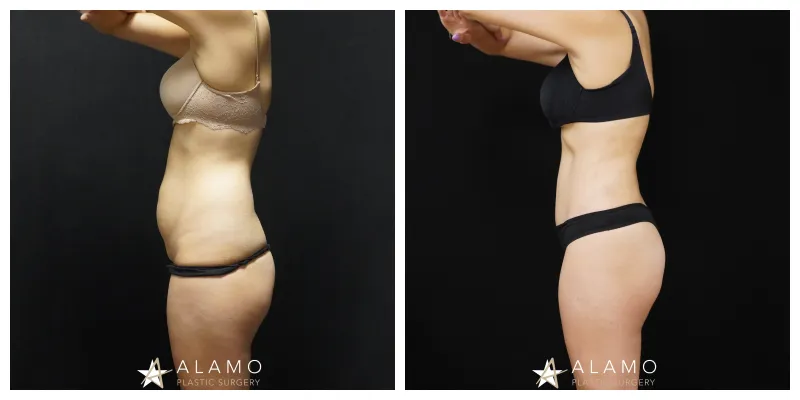
Patient Story:
This 38-year-old mother of two came to Dr. Albright interested in improving her abdominal contour with a tummy tuck. At the time of consultation, she was at a stable weight, did not plan additional weight loss or future pregnancies, and had no history of previous abdominal surgery.
Dr. Albright performed a full abdominoplasty with muscle repair and liposuction to reshape the abdomen and improve the contour of her midsection. Her procedure also included fat transfer to fill the hip dips, helping create a smoother transition between the waist and hips.
By combining the tummy tuck with contouring of the surrounding areas, the procedure addressed the abdomen while improving the overall proportions of her torso. Her results are shown at 5.5 months post-operatively.
- Treatment: Tummy tuck
- Additional Procedures: Muscle Repair, Liposuction
- Gender: Female
- Age: 38
- Height: 5' 2"
- Weight: 126 lbs
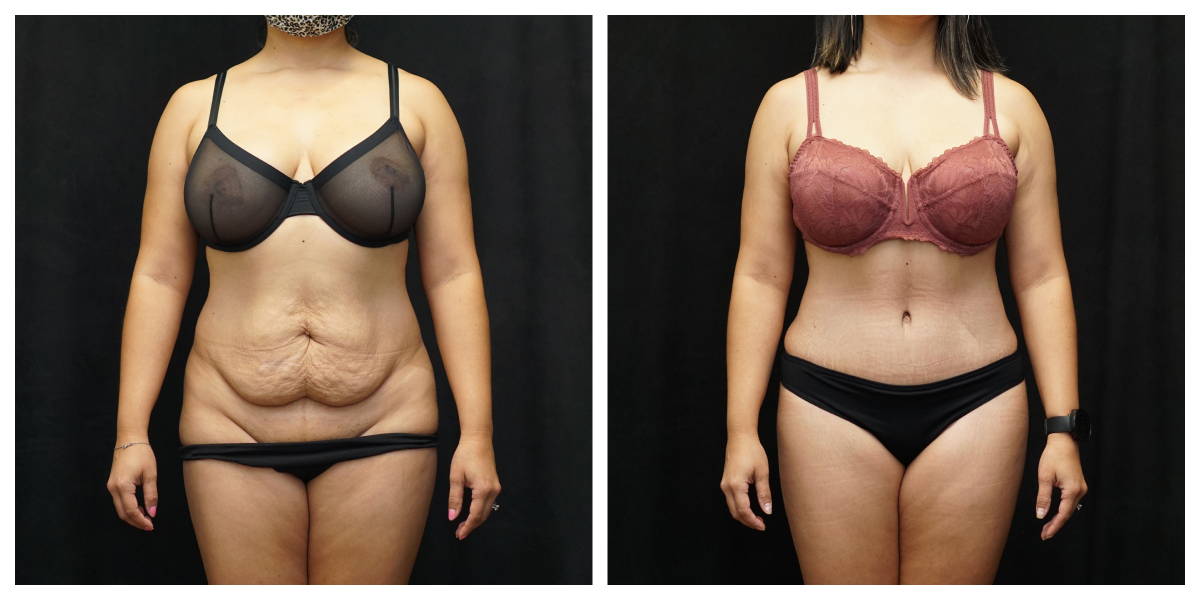

Patient Story:
This 37-year-old mother of two was bothered by several changes to her abdomen after having children, including stretch marks, the appearance of her belly button, and a persistent lower abdominal “pooch.” She enjoyed walking, jogging, and weight lifting and wanted to improve the areas that remained despite her efforts.
Dr. Albright performed a full abdominoplasty with muscle repair to address the abdominal wall and reshape the midsection. Liposuction of the abdomen was incorporated into the procedure to further refine the contour.
The tummy tuck focused on the concerns she identified before surgery, creating a smoother and firmer abdominal profile while improving the overall shape of her midsection. Her results are shown at 4 months post-operatively.
- Treatment: Tummy tuck
- Additional Procedures: Muscle Repair, Liposuction
- Gender: Female
- Age: 37
- Height: 5' 2"
- Weight: 150 lbs












No two abdomens are the same. Your tummy tuck should be planned around your anatomy, concerns, and goals.
Atummy tuck is not a one-size-fits-all procedure. The amount and location of loose skin, the condition of the abdominal wall, previous scars, fat distribution, and overall body proportions can vary significantly from one patient to another.
For some patients, the primary concern is loose skin below the belly button. Others may have more extensive skin laxity following pregnancy or significant weight loss, along with separation of the abdominal muscles known as rectus diastasis. Depending on your anatomy, Dr. Albright may also recommend liposuction to improve contour in areas surrounding the abdomen.
During your consultation, board-certified plastic surgeon Dr. William Albright will evaluate these factors and discuss which approach may be appropriate for you. The goal is not to apply the same operation to every patient, but to create a surgical plan that addresses your individual anatomy while maintaining balanced, natural-looking proportions.

What Can a Tummy Tuck Address?
A tummy tuck, medically known as abdominoplasty, is designed primarily to address excess abdominal skin and changes in the abdominal wall. These concerns commonly develop after pregnancy or significant weight loss and may remain even when a patient maintains a healthy lifestyle and stable weight.
During surgery, excess skin is removed from the abdomen and the remaining skin is repositioned to create a smoother contour. When the abdominal muscles have separated—a condition known as rectus diastasis—the abdominal wall may also be repaired with internal sutures, when appropriate.
A full tummy tuck typically involves repositioning the belly button as the abdominal skin is redraped. The appearance and position of the belly button are therefore important considerations in surgical planning.
For selected patients, liposuction may be performed along with a tummy tuck to address localized subcutaneous fat and improve contour around the abdomen, waist, or flanks. Liposuction and tummy tuck surgery serve different purposes: liposuction removes localized fat, while a tummy tuck primarily addresses excess skin and abdominal wall laxity.
For some patients, tummy tuck surgery may also be incorporated into a personalized Mommy Makeover to address abdominal changes along with breast or other body concerns.
Check out Dr. Albright's YouTube video about Incredible Tummy Tuck Transformation - Post Op 1 Year:


.avif)
The right tummy tuck approach depends on your anatomy, concerns, and the amount of correction needed.
A full tummy tuck, or full abdominoplasty, is designed to address more extensive changes involving the abdomen above and below the belly button. During the procedure, excess abdominal skin is removed and the remaining skin is redraped to create a smoother contour. The belly button is typically repositioned through the newly contoured skin.
When separation of the abdominal muscles (rectus diastasis) is present, repair of the abdominal wall may also be incorporated into the procedure. Liposuction may be added in selected patients to address localized subcutaneous fat and further refine the surrounding contours.
A mini tummy tuck may be appropriate for selected patients whose concerns are primarily limited to loose skin in the lower abdomen below the belly button. It involves a more limited area of correction than a full abdominoplasty and typically does not require repositioning of the belly button.
Because a mini tummy tuck addresses a smaller portion of the abdomen, it is not simply a less invasive alternative to a full tummy tuck. Patients with more extensive skin laxity or abdominal wall changes may require a different approach to adequately address their concerns.
An extended tummy tuck may be considered when loose or excess skin extends beyond the front of the abdomen toward the hips and flanks. The incision extends farther around the waist than with a standard tummy tuck, allowing a broader area of skin to be removed and the surrounding body contour to be addressed.
This approach may be particularly relevant for patients who have experienced significant weight loss or have skin laxity that extends beyond the central abdomen. The extent of the incision and correction is determined by the patient's individual anatomy.
For some patients with substantial skin excess after significant weight loss, a fleur-de-lis abdominoplasty may provide a more appropriate method of contouring the abdomen. This technique uses both a horizontal lower-abdominal incision and a vertical incision, allowing excess skin to be addressed in more than one direction.
Because the additional vertical incision creates a more visible scar, the potential benefits and tradeoffs should be carefully considered. Dr. Albright can determine during consultation whether this approach—or another type of abdominoplasty—is appropriate for your anatomy and goals.
Frequently asked questions about tummy tuck
Good candidates for a tummy tuck are women who are finished with child-bearing (not planning future pregnancies) and at a stable, preferably, body ideal weight. For the best cosmetic results, patients should have a body mass index (BMI) less than 30, and have most of their fat located under the skin instead of inside the abdominal wall. Alamo Plastic Surgery is one of the best plastic surgery clinics for tummy tuck surgery for women in San Antonio, TX. Dr. Albright will assess this during the physical exam. As safety is of utmost importance to Dr. Albright, patients should be medically healthy enough for general anesthesia, and should not have had major abdominal surgeries or mesh-based large hernia repairs. Patients who have had bariatric surgery, should be at least 1 year after their procedure, and have stable weight with adequate follow-up appointment and laboratory studies by their bariatric surgeons prior to considering body contouring procedures.
Preparing for an abdominoplasty (tummy tuck) is key to ensuring a smooth surgery and recovery process. To prepare for surgery, it's essential to maintain a stable weight, follow a healthy diet, engage in regular exercise, quit smoking, avoid certain medications and supplements, complete necessary health screenings, prepare your home for recovery, and follow preoperative instructions closely. These steps will help ensure a successful procedure and smoother recovery.
While you can expect some discomfort after an abdominoplasty (tummy tuck), most patients describe the pain as manageable with proper care. During the surgery, you'll be under anesthesia, so you won't feel anything. After the procedure, it's normal to experience soreness, swelling, and tightness in the abdominal area, especially in the first few days. Your surgeon will prescribe pain medication to help manage any discomfort during the early stages of recovery. The intensity of pain varies from person to person, but most patients find that discomfort subsides significantly within the first week and continues to improve as healing progresses.
A tummy tuck surgery typically takes two to four hours, depending on the extent of the surgery and whether additional procedures are performed simultaneously.
During a tummy tuck, an incision is made across the lower abdomen, from hip to hip. Excess skin and fat are removed, and the abdominal muscles are tightened. The remaining skin is then repositioned to create a more toned look.
The common scar pattern is a horizontal (side-to-side) scar located above the pubic mound near where a C-section scar would be placed. The scar is contoured and positioned so that it should be fairly easy to hide with most types of underwear and bikini bottoms. The scar is longer than a C section scar, and the length depends on how much skin needs to be removed with a "mini abdominoplasty" having the shortest length scar. Occasionally, if the belly button is being relocated, a short vertical scar may be necessary between the belly button and the low horizontal scar, and a scar will be placed around the ‘new’ belly button.
Other scar options are a “reverse tummy tuck” where the scar is placed redundant skin is moved upward, and a horizontal scar is placed under the breasts. This is far less common than the traditional lower body scar. Finally, for patients who have had dramatic weight-loss success including after bariatric surgery, it may be necessary to perform a “fleur-de-lis” incision which combines a traditional lower side-to-side incision with a long vertical incision creating an upside down ‘T’ pattern. This is sometimes needed to address not only top-down skin excess but also side-to-side skin excess. Although the scar pattern is more visible and difficult to hide out-of-clothing, the resulting improvement in shape and waist definition is usually considered a fair trade by these patients.
Learn more about plastic surgery scar care.
In the first week after surgery, the patient will need to maintain a flexed waist (bent-over) position while standing, sitting and lying down. In the days following surgery if drains are used, they will typically be removed by the second week. In the first week patients will wear an abdominal binder 24/7, followed by 5 weeks of a compression garment. Walking exercise may be resumed by 4 weeks in most patients, followed by advancing to strenuous activities at 6 weeks. Most patients will be unrestricted by 2 months after surgery (out of compression and performing all normal exercise or physical activities). However, if a rectus diastasis repair was performed, Dr. A will recommend avoiding intense abdominal bracing movements like heavy weightlifting, until 3 months after surgery, and with precautions.
One of the biggest reasons for the tremendous growth in non-surgical or minimally-invasive body contouring procedures is the longer recovery involved with surgery. However the surgical result can not be replicated with these other technologies. Every month, Dr A works with patients who have high work / life demands, including parental responsibilities. Although individual recommendations may vary, most patients will need at least 2 weeks to recover from surgery prior to resuming less physically demanding work assignments, regular household chores and primary child care. Ideally the patient’s younger children do not need to be lifted routinely, and are able to climb in and out of their car seat without help. Most patients benefit from the assistance of a spouse or partner for the first week, and a family member for the second week.

As the proverb goes, good things come to those who wait. The healing process takes time. The initial swelling from surgery is the body’s response to inflammation caused by surgical injury. When a surgically created space is made and inflammation is present, the body will allow clear fluid (serous fluid) from your circulation to move into the space. Swelling may take as long as 3-5 months after surgery to completely resolve and reveal your postoperative figure. Additionally, the scars will continue to mature their appearance over 8-12 month time period. Dr. Albright and his staff will help you through this transition period. He will tailor the procedures to best fit your goals! He is one of the best Tummy Tuck surgeons in San Antonio TX.
Yes, it is common to combine procedures as there is usually less total expense and only one postoperative recovery period. Additionally, patients will have a much more profound body makeover. The most common procedures performed with a tummy tuck plastic surgery are breast surgeries (breast augmentation, breast lift, augmentation mastopexy or fat transfer to the breasts) and is commonly described as a “mommy makeover”. However, there are drawbacks to combining procedures and it may not be ideal for all patients. The complications from combined surgeries is slightly higher than doing the procedures independently especially for blood clots. Dr. William Albright, one of the best surgeons for tummy tuck surgery, and he will assess these risks and will be happy to give you his honest opinion.
Congratulations on the pregnancy! But now what? Your body will accommodate the growing fetus and may do what it did with any previous pregnancies. This includes allowing the tissue (fascia) between the ab muscles (rectus abdominis) to stretch which produces “rectus diastasis” or “diastasis recti”. Depending on the type of tummy tuck plastic surgery you had (rectus plication or mesh for hernia repair), there is a chance that this repair could fail and you would develop similar issues that you had before your tummy tuck surgery. Additionally, skin on the belly will stretch again and with or without significant weight loss, you may develop some skin redundancy again. Dr. Albright, one of the best tummy tuck doctors and tummy tuck surgeons, may need to perform a touch up to return you to your prepregnancy result.
No. A tummy tuck does not remove visceral fat, which is located deeper inside the abdominal cavity around the internal organs. Abdominoplasty primarily addresses excess abdominal skin and, when appropriate, abdominal wall laxity or muscle separation. Liposuction may be used to reduce selected areas of subcutaneous fat—the fat located beneath the skin—but it does not remove visceral fat. Dr. Albright can evaluate the different factors contributing to abdominal fullness during your consultation.
A tummy tuck and liposuction address different concerns. A tummy tuck primarily removes excess skin and can address abdominal wall laxity or muscle separation when appropriate. Liposuction removes localized subcutaneous fat but does not remove significant loose skin or repair the abdominal wall. Some patients may benefit from combining the two procedures, while others may need only one. The appropriate approach depends on your anatomy and goals.
Tummy tuck results can be long-lasting, but the body will continue to change over time. Significant weight fluctuations, future pregnancy, aging, and other factors can affect the abdominal skin and contour after surgery. Maintaining a relatively stable weight can help preserve the result. A tummy tuck cannot prevent future changes to the abdomen.
Schedule a Consultation
for Tummy Tuck
To schedule a private consultation with Dr. Albright, please call the office or request an appointment online. We welcome your visit.
Your submission has been received and we will reach out to you soon!!


